Trade Splaining
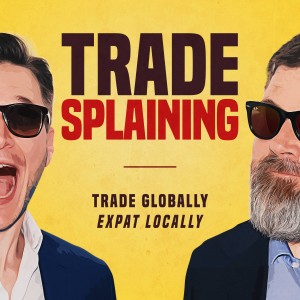
A fun and entertaining look at global affairs, trade and the United Nations, brought to you from the perspective of two American expats living in Switzerland. They try to keep a straight face while recapping the latest in current events and the local scene in Geneva, Switzerland as well as interviews with fellow expats on the international scene and leaders in their respective fields.
Listen on:









Episodes
Friday Jun 27, 2025
Friday Jun 27, 2025
In Episode 80 of Trade Splaining, we’re pulling back the curtain on everything from secret sausage wars to how Apple helped build modern China. Along the way, we break down the increasingly blurry line between trade policy and geopolitics, why AI is now after your desk job, and how sober tailgates and millennial nostalgia are the new macro indicators.
Special Guest: Patrick McGee, FT journalist and author of Apple in China, joins us to explain:
Why Apple didn’t just outsource manufacturing to China—it helped build it
How a $55B investment strategy turned into a Marshall Plan for advanced manufacturing
Why decoupling is harder than we think, and what it means for the future of globalization
Also in this episode:
Is trade policy dead—or just dressed up as national security?
The AI job shock: not just repetitive tasks, but white-collar jobs too
A big new EU–Switzerland trade deal (and an even bigger name: “The Bilaterals”)
Listener feedback, airline mysteries, stolen sausage secrets, and the return of All-American Rejects
🎧 Listen now on Spotify, Apple Podcasts, or wherever you get your shows.
Friday May 30, 2025
Friday May 30, 2025
Description:In Episode 79 of Trade Splaining, Rob and Ardian dive deep into the surprising relevance of decarbonizing global shipping, why GDP might not be the best metric anymore, and how the EU and UK are slowly making Brexit... not a thing. We also ask: is multilateralism really dead—or just resting?
💡 What You'll Hear in This Episode:
Circular Reasoning (with actual logic): Guest Eva-Maria Bille of the European Environmental Bureau unpacks why circular economy policies matter more than ever—especially in a world of inflation, geopolitics, and defense budgets.
Shipping News That Doesn’t Suck: The IMO’s historic (kind of) net-zero deal for shipping by 2050, what it means, and why it’s both hopeful and half-baked.
Sell America? Moody’s downgrades the US credit rating, tourism is slowing, and Americans are quietly flocking to Swiss banks. Coincidence? We think not.
GDP Is Over Party: A new push to rethink how we measure economic health. Is it time to dump GDP in favor of balance sheet metrics?
Brexit: The Silent Patch-Up: A new EU-UK trade deal smooths post-Brexit trade pain. Is it a quiet realignment or political heresy?
Swiss Wool Emergency & War Readiness: From Geneva’s updated war brochure to a growing sheep wool crisis, it’s your must-hear Swiss WTFs.
🔁 Also Featuring:
Listener shoutouts to "Eric" and Ron "Burgundy"
Michelle’s "Vibe Shift" report: Enron eggs, TikTok satire, and the birds that were never real
A kebab-off between Geneva and Beirut
A surprisingly accurate Bond reference and sheep-related crisis management
📬 Subscribe, review, share—and email us your feedback or best kebab takes at Trade.Splaining@gmail.com
Listen now on Spotify, Apple Podcasts, or wherever you get your podcasts.
Friday May 02, 2025
Friday May 02, 2025
In Episode 78 of Trade Splaining, hosts Rob and Ardi explore the complex impact of tariffs on global trade, the humorous yet insightful nature of episode 78, and unique trade issues around the world. Guest Lars Karlsson from Maersk discusses how both small and large companies are navigating the new trade realities. The episode also covers topical issues such as the pistachio shortage, the impact of European policies on trade, and new recession indicators. Additionally, it touches on disruptions like the ban on Brazilian butt lift ads in the UK and the rise in train robberies.
00:00 Introduction and Episode Overview
02:31 Listener Feedback and Corrections
04:26 Market Trends and Economic Insights
12:59 De-Dollarization and Global Financial Shifts
16:35 Interview with Lars Carlson: Navigating Trade Complexities
20:47 Challenges for Small and Medium Enterprises (SMEs)
21:27 The Role of AI in Supply Chain Management
22:40 Customs and Compliance in a Changing Trade Environment
24:14 The Impact of Tariff Conflicts on Global Trade
26:24 Navigating Uncertainty in International Trade
29:11 The Future of Trade and Emerging Solutions
36:08 Recession Indicators and Economic Trends
38:53 Local News and Unusual Events
40:50 Podcast Wrap-Up and Listener Engagement
Monday Apr 07, 2025
Monday Apr 07, 2025
Episode 77: China’s China Shock & Tariff Reality Check ft. Peter S. Goodman
Episode Summary:In Episode 77 of Trade Splaining, we dig into China’s very own “China Shock,” why Budweiser is going budget in Shanghai, and how the global economy might be looking a lot more like... China’s.
Plus, New York Times journalist Peter S. Goodman returns for his third appearance to discuss how the ground-level impact of tariffs is changing the game—from Colombian factory floors to bourbon country in Kentucky.
We’re also talking nearshoring, recession vibes, and why Geneva’s exotic bird problems could signal more than just invasive species.
🔍 In this episode:
Why China’s slowdown is not just about growth, but a structural shift in manufacturing
What the "China China Shock" means for global supply chains
Is Trump’s tariff plan actually a branding strategy?
What whiskey, rye, and Louisville have to do with nationalism
And…the clean girl aesthetic as a recession indicator 🧴
🎧 Listen now on Apple, Spotify, or wherever you get your podcasts.
Special Guest:📚 Peter S. Goodman – Global Economic Correspondent at The New York Times and author of How the World Ran Out of Everything
🔗 Connect with us:
X / Twitter: @TradeSplaining
Instagram: @trade.splaining
Email: tradesplaining@gmail.com
Thursday Mar 20, 2025
Thursday Mar 20, 2025
Episode Summary:In this episode of Trade Splaining, we unpack the latest twists in the Green Transition—spoiler alert: China’s winning. We also explore how chaos is reshaping global trade, why Manchester United’s new stadium might cost a fortune (hint: tariffs), and the Swiss government's crackdown on... cheap meat?
Our guest, Professor Joost Pauwelyn, joins us to break down 21st-century customs fraud, how trade rules are shifting, and why the WTO may actually survive this era of economic uncertainty.
If you’ve ever wondered how renewable energy, geopolitics, and tariffs intersect—or whether you should still care about composting—this episode is for you.
🔹 In This Episode:
China’s dominance in the Green Transition and why Europe is struggling to keep up
The hidden cost of Manchester United’s new stadium—tariffs, steel prices, and trade wars
Switzerland’s unexpected role as the world's top container trader
What’s happening with customs fraud, sustainability standards, and the rise of "trade surveillance"
The future of WTO, and why reciprocal tariffs might actually save it
And, of course, a deep dive into Geneva’s most pressing issue—affordable meat
🎧 Listen now on Apple Podcasts, Spotify, or wherever you get your podcasts.
🔗 Links & Mentions:
Follow us on Twitter/X
Join the conversation on Instagram
Have a hot take? Email us at tradesplaining@gmail.com
Monday Feb 24, 2025
Monday Feb 24, 2025
Episode 75: Tariffs, Work From Home & Beaver Hunting?
Episode Summary:In this episode of Tradesplaining, Rob and Ardi tackle tariffs, Gen Z’s middle management crisis, and the work-from-home debate. As Trump’s economic policies continue reshaping global trade, we look at the real-world impact of escalating tariffs, Canada and Mexico’s shifting strategies, and how businesses are struggling to adapt.
Plus, we dive into:✅ The collapse of the $80B diamond market – Are diamonds not forever?✅ Jamie Dimon vs. Work From Home – Why America’s biggest bank CEO really doesn’t believe you work on Fridays✅ Gen Z’s "Middle Management Revolt" – Why young professionals are rejecting promotions✅ China’s Biotech Boom – The next frontier in U.S.-China competition✅ Switzerland's Legalization of...Beaver Hunting?! – Yes, this is a real story.
All this, plus a deep dive into the latest global trade shifts, economic uncertainty, and what it means for businesses, workers, and everyday consumers.
What’s Inside This Episode?
💰 Tariff Wars 2.0 – The U.S. is escalating trade restrictions at breakneck speed. We analyze:👉 How tariffs on Canada, Mexico & China are upending supply chains👉 The U.K.’s balancing act between Washington and Brussels👉 What Trump’s “reciprocal tariff” plan could mean for global trade
🏡 Work From Home Under Fire – Are remote workers actually working on Fridays?👉 Jamie Dimon of JP Morgan doesn’t think so, and his latest comments are sparking a new work-from-home war.👉 Is there a growing divide between remote workers and office culture?
👔 Gen Z’s Rejection of Middle Management – A shocking new study says:👉 50% of Gen Z white-collar workers don’t ever want to be middle managers👉 Many view it as "high stress, low reward" – are they wrong?👉 What does this mean for the future of leadership & corporate structures?
💎 The Diamond Market Crash – Why the $80B diamond industry is imploding post-COVID.👉 De Beers is struggling – is this the end of an era?👉 Are lab-grown diamonds taking over?
💊 China’s Biotech Boom – China now produces 30% of the world’s new drug patents, up from 5% just a decade ago.👉 Can U.S. tariffs slow China’s rise in pharmaceuticals?👉 Is biotech the next big U.S.-China trade war battleground?
🇨🇭 Switzerland News Roundup – Only in Switzerland…👉 Legalizing Cannabis – but is Switzerland ready for a nationwide rollout?👉 Legalizing Beaver Hunting?! – Yes, really. It’s happening.
🎙️ And, of course, plenty of listener feedback, jokes, and the best trade analysis that won’t put you to sleep!
Thursday Feb 06, 2025
Thursday Feb 06, 2025
Episode Summary:In this episode of Trade Splaining, hosts Rob and Ardi dive into the latest on tariffs, AI disruptions, and surprising tourism trends. We break down the new wave of tariffs, their impact on global trade, and what they signal for U.S. economic strategy. Plus, we explore China’s DeepSeek AI breakthrough, the EU’s struggle to stay competitive, and Switzerland’s unexpected move to expand free trade amid growing protectionism.
We also speak with Ed Gresser, VP of the Progressive Policy Institute, who helps unpack tariff escalation, economic shifts, and the power of data in today’s rapidly evolving trade landscape.
Oh, and we discuss how Afghanistan is suddenly a booming tourist destination (yes, really) and why Jaguar just dropped $80 million on custom car paint.
Expect deep insights, witty banter, and the kind of trade talk that actually keeps you awake.
What’s Inside This Episode?
🔥 Tariffs & Trade Wars 2.0 – The U.S. is going all-in on tariffs, but will it backfire? We analyze who gets hit hardest and why Mexico is taking a one-month pause before retaliating.
🧠 AI’s "Sputnik Moment" – China’s DeepSeek AI has shaken the global tech world, wiping out $1 trillion in U.S. tech stocks. Are U.S. chip restrictions failing? And what does this mean for the future of AI dominance?
🇪🇺 Europe’s Economic Identity Crisis – Is the EU finally rethinking its strict regulations? We break down how France and others are pushing for fewer rules and bigger corporate champions to compete globally.
🇨🇭 Switzerland’s Trade Play – While everyone else tightens their borders, Switzerland is expanding free trade agreements, doubling down on market access amid rising global tensions.
✈️ Tourism in Taliban-Controlled Afghanistan? – Believe it or not, thousands of tourists are flocking to Afghanistan. We examine who’s going and why.
🎨 Luxury or Lunacy? Jaguar’s $80M Paint Investment – While most of the world worries about inflation, Jaguar is out here spending millions to offer more custom paint jobs. A smart branding move or just another sign of widening wealth gaps?
🎙️ Guest Spotlight: Ed Gresser (PPI) – We talk tariff escalation, trade shifts, and why data matters more than ever in economic policymaking.
Episode Highlights:
📌 [02:00] – AI’s “Humanity’s Last Exam” – Should we be worried?📌 [09:00] – U.S. Tariffs & the Ripple Effect – The winners and losers📌 [16:00] – Europe’s Economic Shift – Less regulation, more competition?📌 [19:00] – Switzerland’s Trade Gambit – A lone free trader in a protectionist world📌 [24:00] – Why Afghanistan Tourism is Surging📌 [26:00] – Interview with Ed Gresser – The Future of Tariffs & Trade
Tuesday Jan 21, 2025
Tuesday Jan 21, 2025
Welcome to Trade Splaining, the podcast that makes sense of international trade, business, and expat life without putting you to sleep! In our first episode of 2025, Rob and Ardi dive into a new year of trade predictions, global trends, and some surprising insights about life, business, and...sausages?
In This Episode:
2025 Trade Predictions: What’s in store for global trade and why tariffs, insurance, and inflation will dominate discussions.
China’s Record Trade Surplus: How near $1 trillion exports reveal vulnerabilities in domestic demand and fuel trade tensions.
The Role of Insurance in Climate Economics: With the world heating up, we explore the escalating costs and the ripple effects of uninsurability.
Labor vs. Capital: As 2025 unfolds, who has the upper hand, and what does it mean for workers?
New Apps, Old Vibes: Michelle talks about the shifting digital landscape and why the U.S. government’s TikTok actions may have unintended consequences for cultural learning.
Other Highlights:
A look back at tantalum, the rare metal behind cutting-edge watches and electronics.
Sausage bars in Geneva? Yes, it’s a thing now!
Why Eurovision in Switzerland might just be worth your time (or not).
Fun Fact: This is episode 73, the atomic number of tantalum, tying it all back to international trade and rare resources!
Listener Call-to-Action:Got predictions for 2025? Or thoughts on tariffs, tantalum, or Taylor Swift’s rumored climate anthem? Let us know!
Email us at trade.splaining@gmail.com
Follow us on Twitter (@Tradesplaining) and Instagram (@trade.splaining)
Where to Listen:You can find Trade Splaining on Apple Podcasts, Spotify, YouTube, or wherever you get your podcasts. Don’t forget to subscribe, leave a review, and share it with a friend (or a stranger).
Listen Responsibly
Tuesday Dec 31, 2024
Tuesday Dec 31, 2024
Episode 72: Predicting Economic Trends, Indigenous Art, and the Revival of Mercantilism
In this week’s episode of Trade Splaining, Rob and Ardian explore the latest quirks and complexities of global trade and economics, with a special focus on cultural preservation.
🎙️ What You’ll Hear:
💄 Lipstick Economics: How luxury consumer trends hint at economic uncertainty.
🌍 Mercantilism Returns: Why nations are revisiting protectionist policies and what it means.
🎨 Spotlight on Indigenous Art: Special guest James Johnson, Tlingit artist and carver, shares his journey of balancing cultural preservation with global market opportunities.
🔑 Key Takeaways:
The luxury market is shrinking, signaling potential shifts in consumer confidence.
Mercantilist policies are reshaping trade and economic relations worldwide.
Indigenous artists like James Johnson are trailblazing pathways for cultural exchange and representation in global markets.
🎧 Listen Now:
Available on Spotify, Apple Podcasts, or anywhere you get your podcasts.
🔍 SEO Keywords:
Lipstick Economics
Mercantilism in Modern Trade
Indigenous Art in Global Markets
Tlingit Culture and Trade
Luxury Market Trends
Economic Forecasting
Global Trade Policy Podcast
Stay informed, stay curious, and, as always, listen responsibly! 🎙️
Friday Dec 06, 2024
Friday Dec 06, 2024
Episode 71: Tarantulas, Tariffs, and Trade Wars: Ambassador Maria Pagan on Global Trade’s Future
In this week’s episode of Tradesplaining, Rob and Ardi tackle the unexpected, the essential, and the downright quirky in global trade and policy. Joined by Ambassador Maria Pagan, U.S. representative to the WTO, this episode offers insights and plenty of laughs as they explore:
🎙️ What’s Inside:
Tarantula Smuggling Gone Wild 🕷️: A man caught with 300 tarantulas at customs? Learn how the global wildlife trade intersects with international regulations.
COP29 Climate Talks 🌱: From funding gaps to policy fatigue, we break down the major takeaways from the latest climate conference and what it means for global sustainability.
Cheese and Tariffs 🧀: Why Parmesan is being hoarded in response to shifting trade policies.
National Security in Trade 🛡️: Ambassador Pagan explains how national security exceptions are reshaping trade policy and the role of the WTO in dispute resolution.
Globalization Trends 🌍: Are new tech jobs like TikTok QVC hosts the latest iteration of globalization?
🔑 Key Takeaways:
The U.S. perspective on the WTO’s role in dispute resolution.
How climate goals are stalling at COP29 and what needs to happen next.
Quirky stories that make trade more relatable, from smuggled wildlife to unusual customs cases.
🎧 Listen Now:
Available on Spotify, Apple Podcasts, and everywhere you get your podcasts. Don’t forget to leave a review and share with friends who love global stories with a twist!
📌 Follow Us:
Twitter: @Tradesplaining
Instagram: @trade.splaining
Email: tradesplaining@gmail.com
🔍 Keywords:
COP29 Climate Talks
National Security Trade Policy
Ambassador Maria Pagan WTO
Tarantula Smuggling Stories
Global Trade Podcast
Parmesan Cheese Tariffs
TikTok Globalization Trends
Climate Finance Challenges
Wildlife Trade Regulations
Sustainable Trade Practices
Stay informed, stay entertained, and as always—listen responsibly! 🎙️